Some gates aren’t worth pouring money into one repair at a time. When the wiring, weatherproofing and safety were all cut-corner from day one, doing it once — properly — works out cheaper and safer than chasing faults forever.
A large part of our work is rectifying problems caused by previous installations. Most aren’t obvious until something stops working — by which point the damage to motors, cables, and control boards is already done.
Below are real examples from recent callouts. We’ve removed any details that identify the property or the original installer. The point isn’t to criticise anyone — it’s to show what proper workmanship looks like compared to what we routinely walk into.
And what looks like a run of unrelated small faults is often one underlying problem: the gate was never wired or weatherproofed to standard in the first place. That’s the difference between a gate worth repairing and one worth reinstalling — more on that below.
Example 1
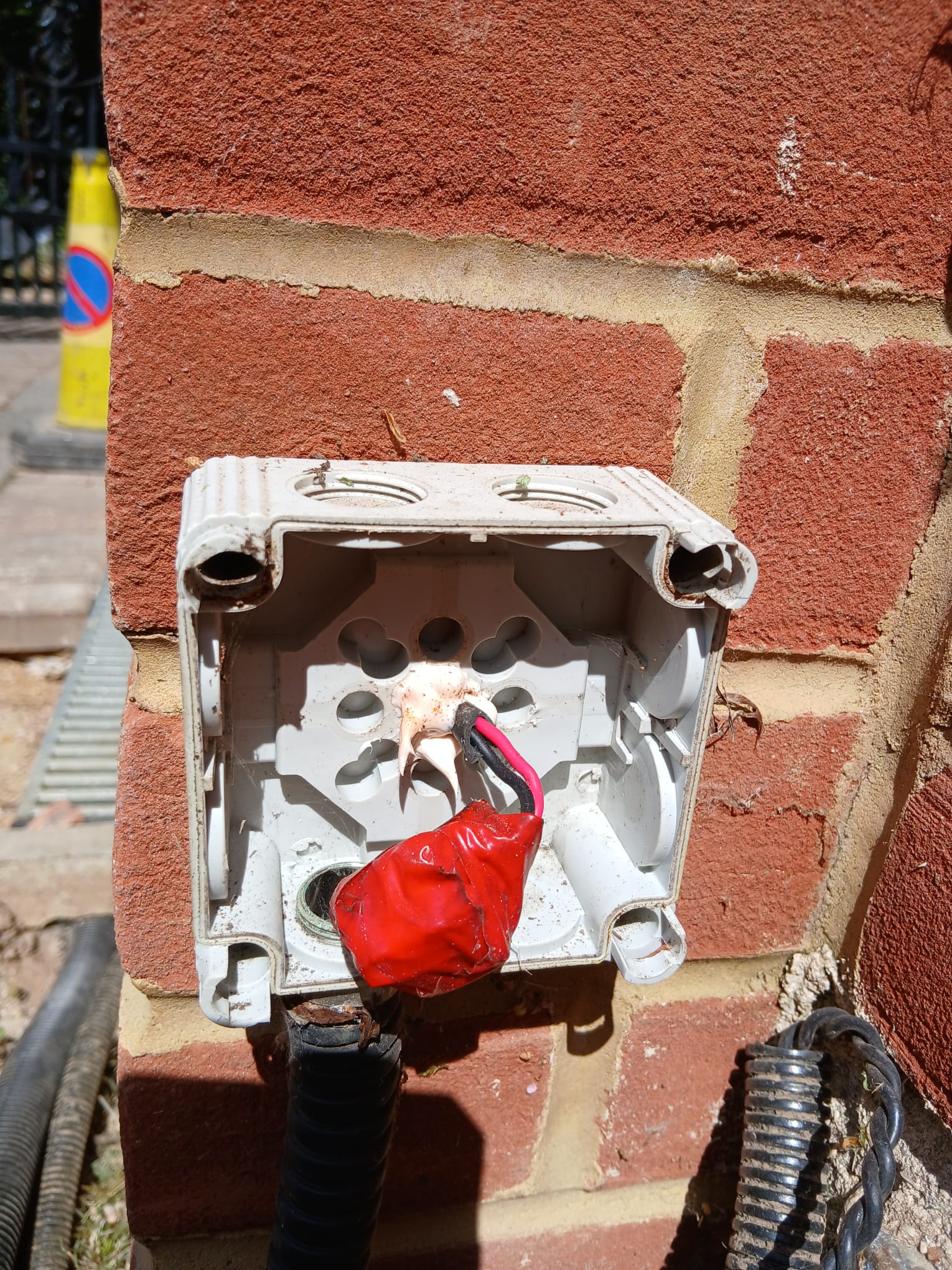
Open holes in the control box
Unsealed cable entries let slugs and spiders nest inside the controller. Combined with the wrong type of cable used on the outside, water gets pulled in along the wires. Both are common causes of expensive, intermittent failures.
Example 2
Sensors wired through extra connections
Photocell sensors were run through extra inline junctions on the way back to the control panel. Every additional connection is another failure point. Sensors should be wired directly into the control panel, with no extra joints in between.
Example 3
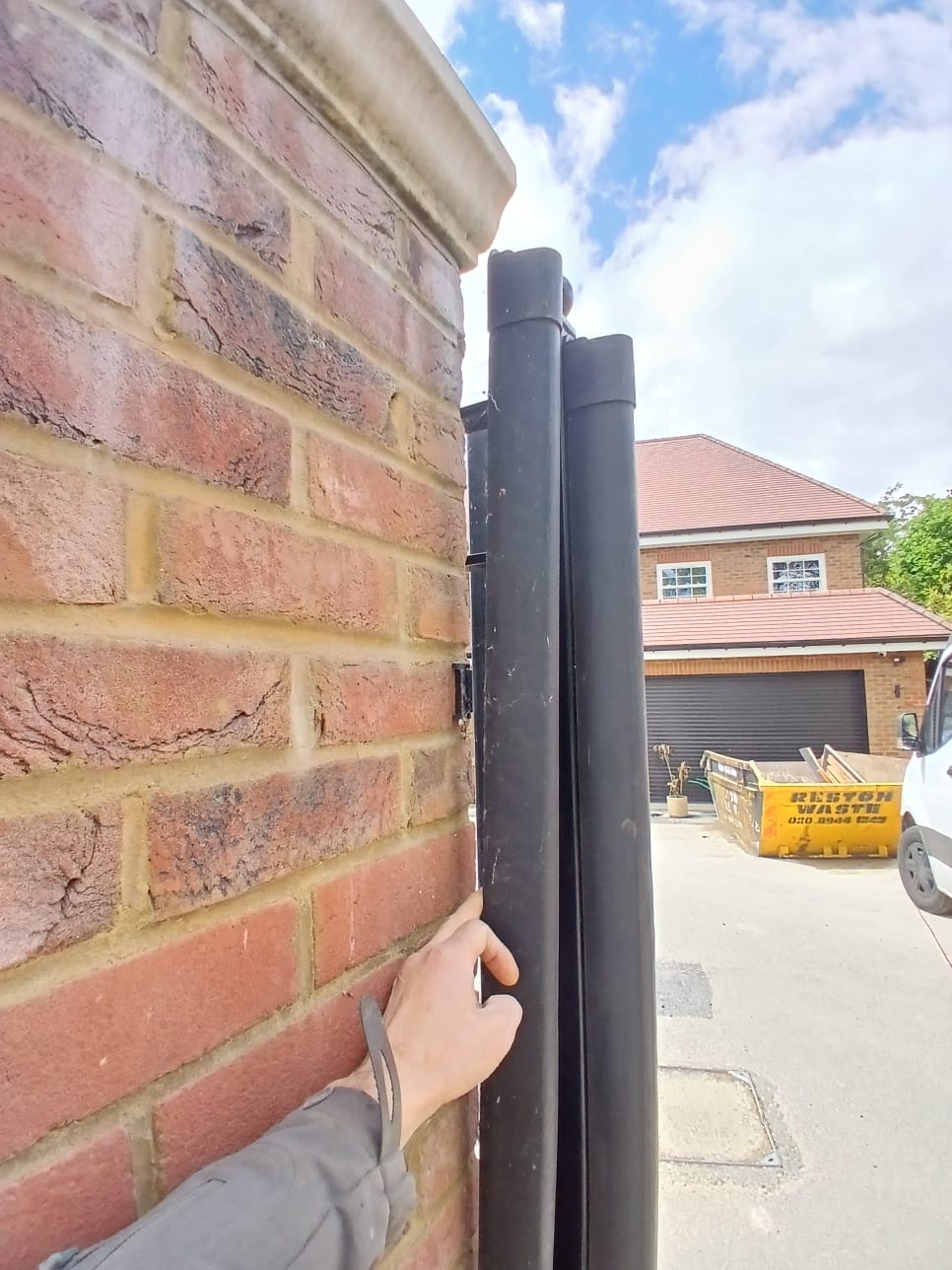
Cable runs not properly fixed
Cable conduits left unfixed against the wall. Every time the gate moves, they flex and pull on the connections inside. Over time, terminals work loose and the gate develops intermittent faults that are difficult to trace.
Example 4
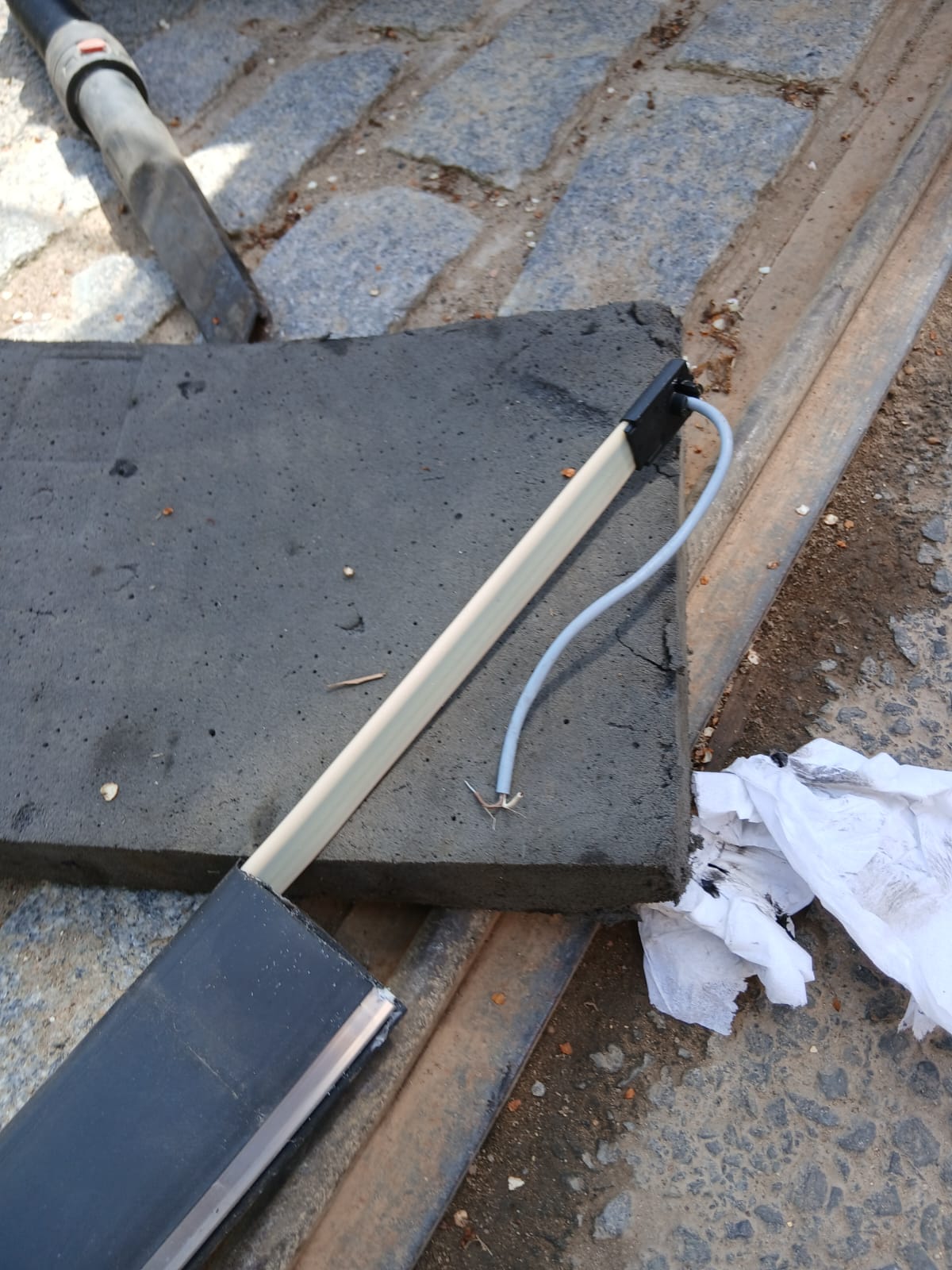
Safety edge not connected
Leading-edge safety on a 400kg sliding gate — physically present, but not wired to a controller. No impact-stop, no reversal. A serious safety failure on a heavy gate that meets the public.
Example 5
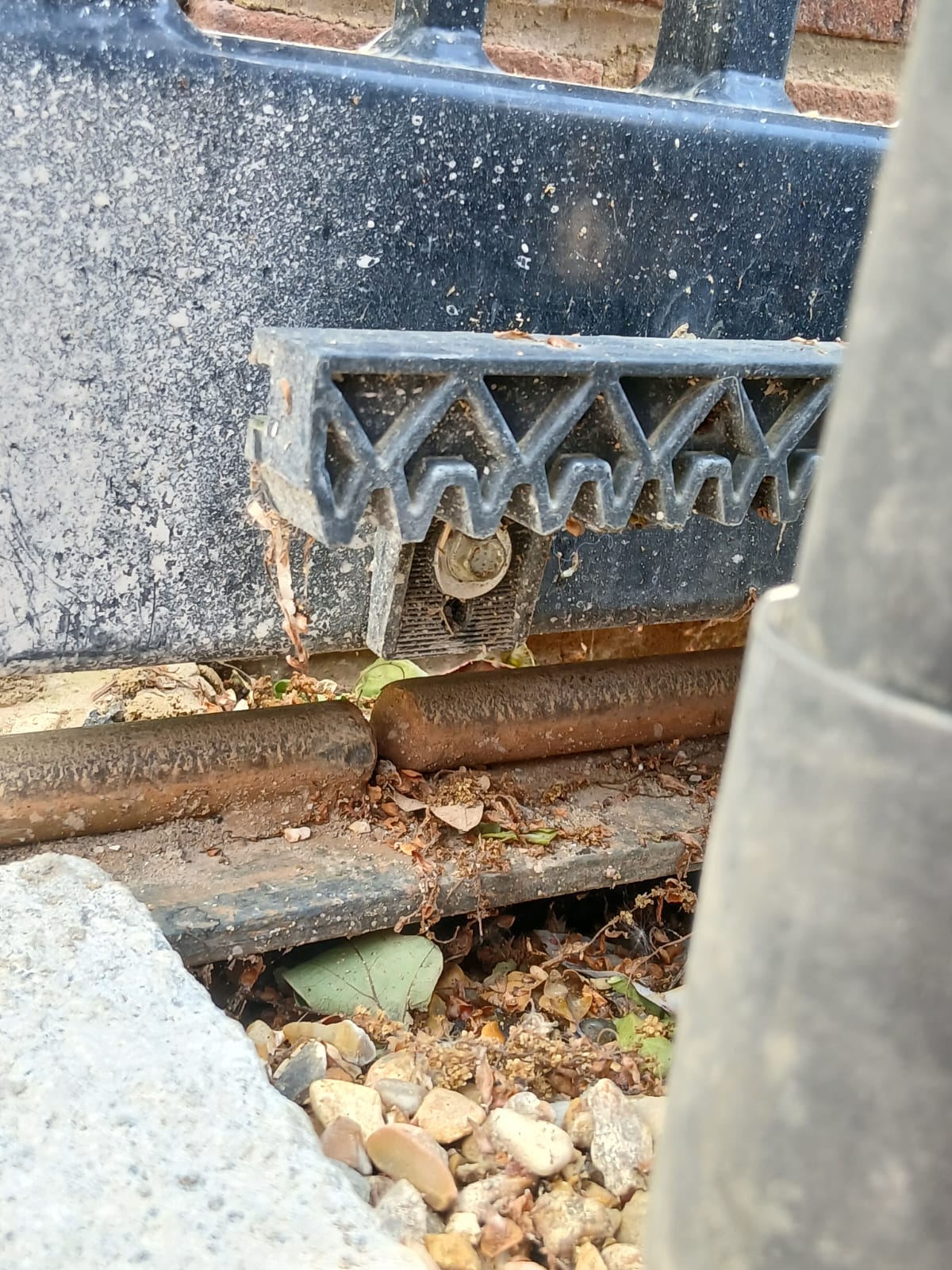
Sliding gate track misaligned
The track was laid with a gap and out of alignment. The gate runs stiff, generates noise, and forces the motor to work harder on every cycle — significantly reducing motor lifespan and bringing a replacement bill forward by years.
Example 6
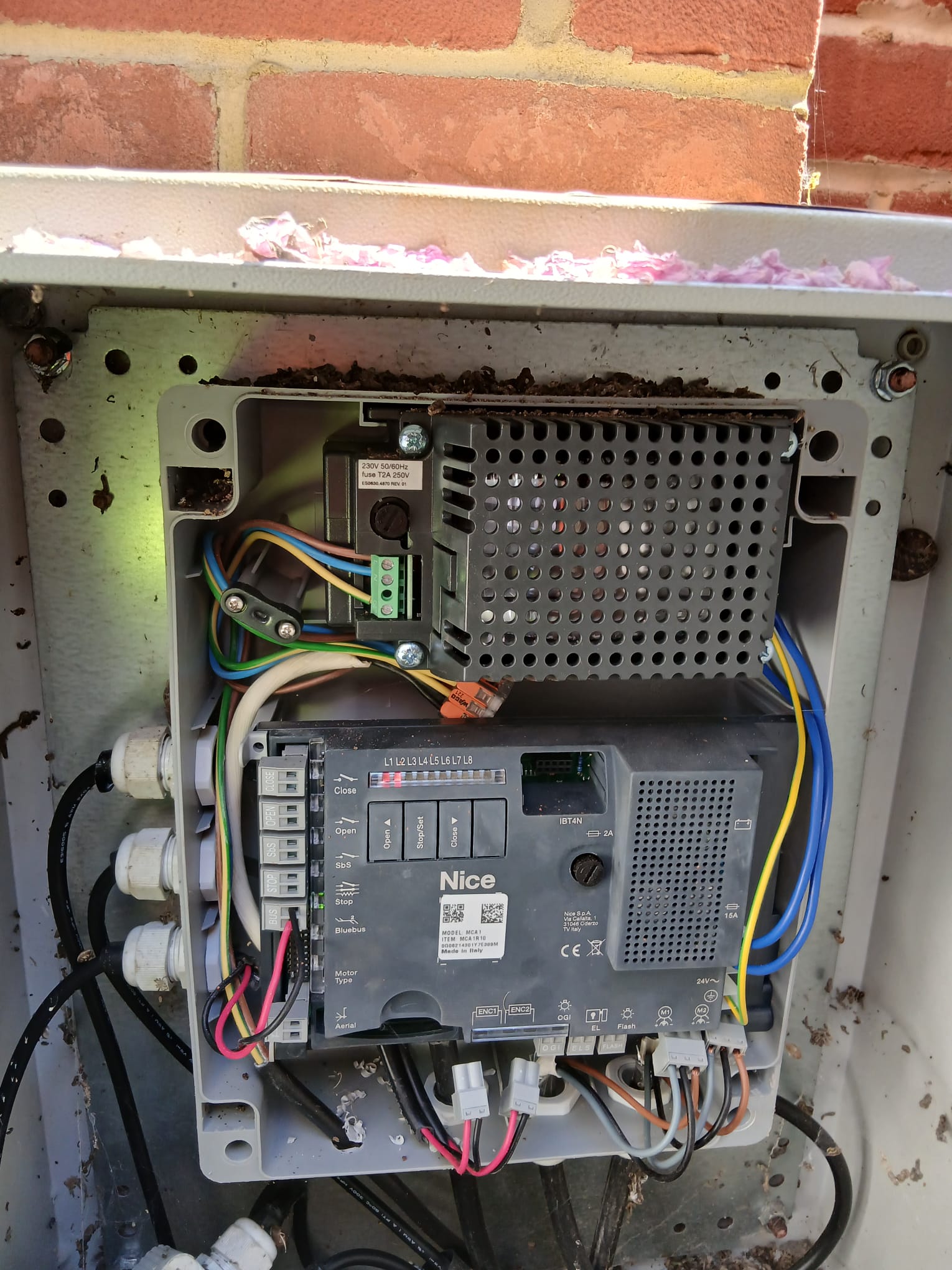
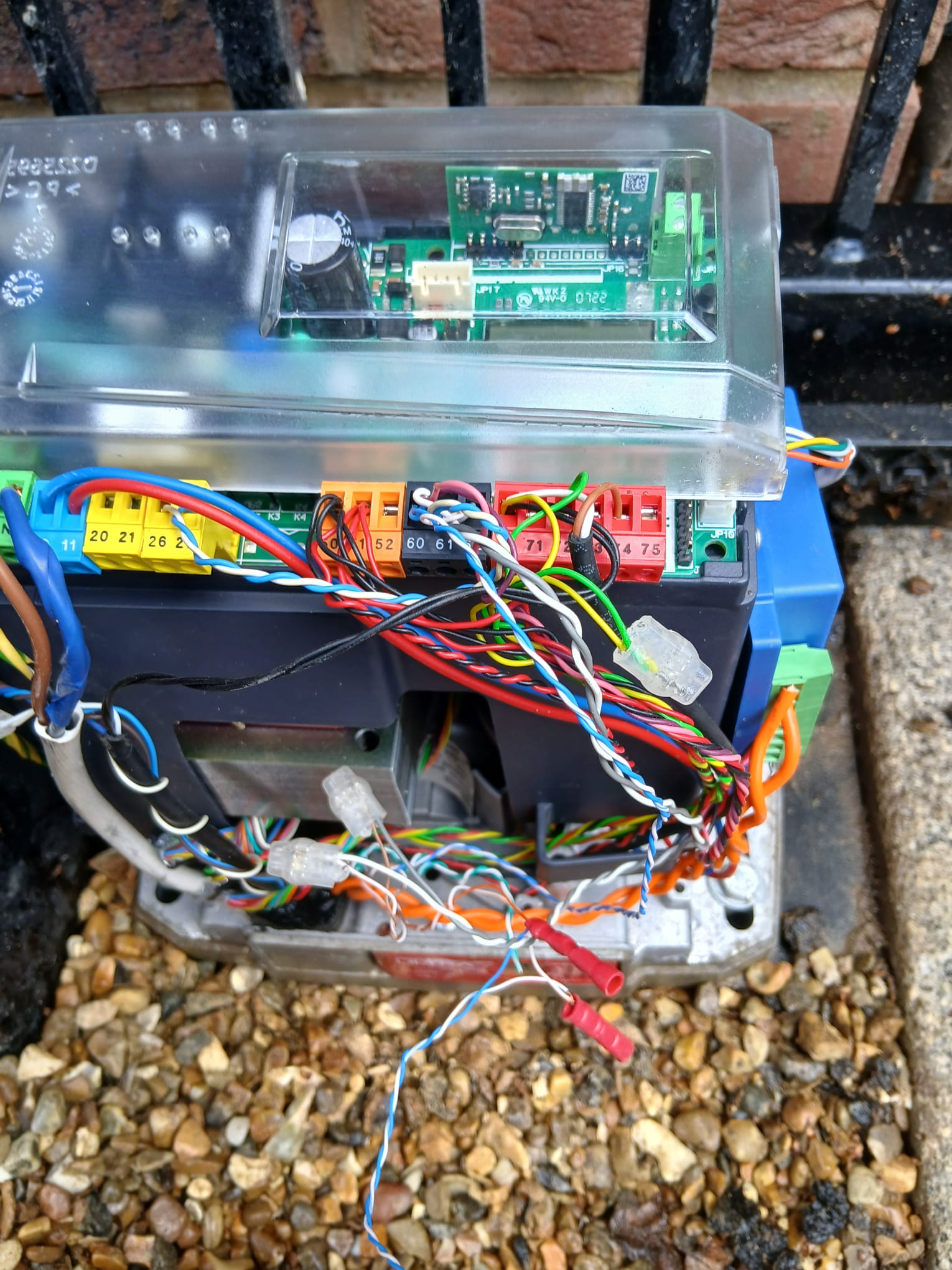
Difficult-to-trace wiring
Multiple inline connections inside the controller, none labelled. When something does fail, fault-finding becomes a full investigation. What should be a 30-minute repair turns into hours of diagnosis.
When it’s the install, not the part
A failed photocell or a tired control board is a normal repair. But three things we see again and again aren’t a single faulty part — they’re the gate being built wrong from the start, and no one repair fixes them.
The wrong, too-thin cable
Loads of gates have their safety beams, keypad and intercom run in thin telecom (Cat5) cable. Think of the cable like a water pipe — telecom cable is a drinking straw, fine for a phone signal but it starves a gate’s sensors of steady power, especially on a long run from the house. Proper gate control cable has more than twice the copper inside (the size the manufacturers’ own manuals call for), so the sensors keep working reliably through winter instead of dropping out in the cold.
Water sitting in the boxes
Any buried or outdoor box slowly fills with water — partly rain getting in through unsealed cable holes, partly damp air being drawn down the cable ducts and turning to water inside. Sit a motor’s electrics or its connections in that and you get corrosion, tripping and a slow death for the motor or control board. A flooded box isn’t bad luck — it’s the predictable result of the wrong box, no drainage and unsealed cable entries.
No power cut-off at the gate
Plenty of gates are wired straight back to a socket or a hidden joint in the house, with no switch at the gate to cut the power. Anyone working on the gate — to service it, clear a fault, or free someone trapped — needs a switch right there that guarantees the motor can’t suddenly spring to life, and a homeowner needs a fast way to kill it in an emergency. A weatherproof, lockable isolator at the gate is what the wiring rules expect for anything outdoors — and it usually travels with the safety trip and the earthing being done right too.
What a proper reinstall looks like
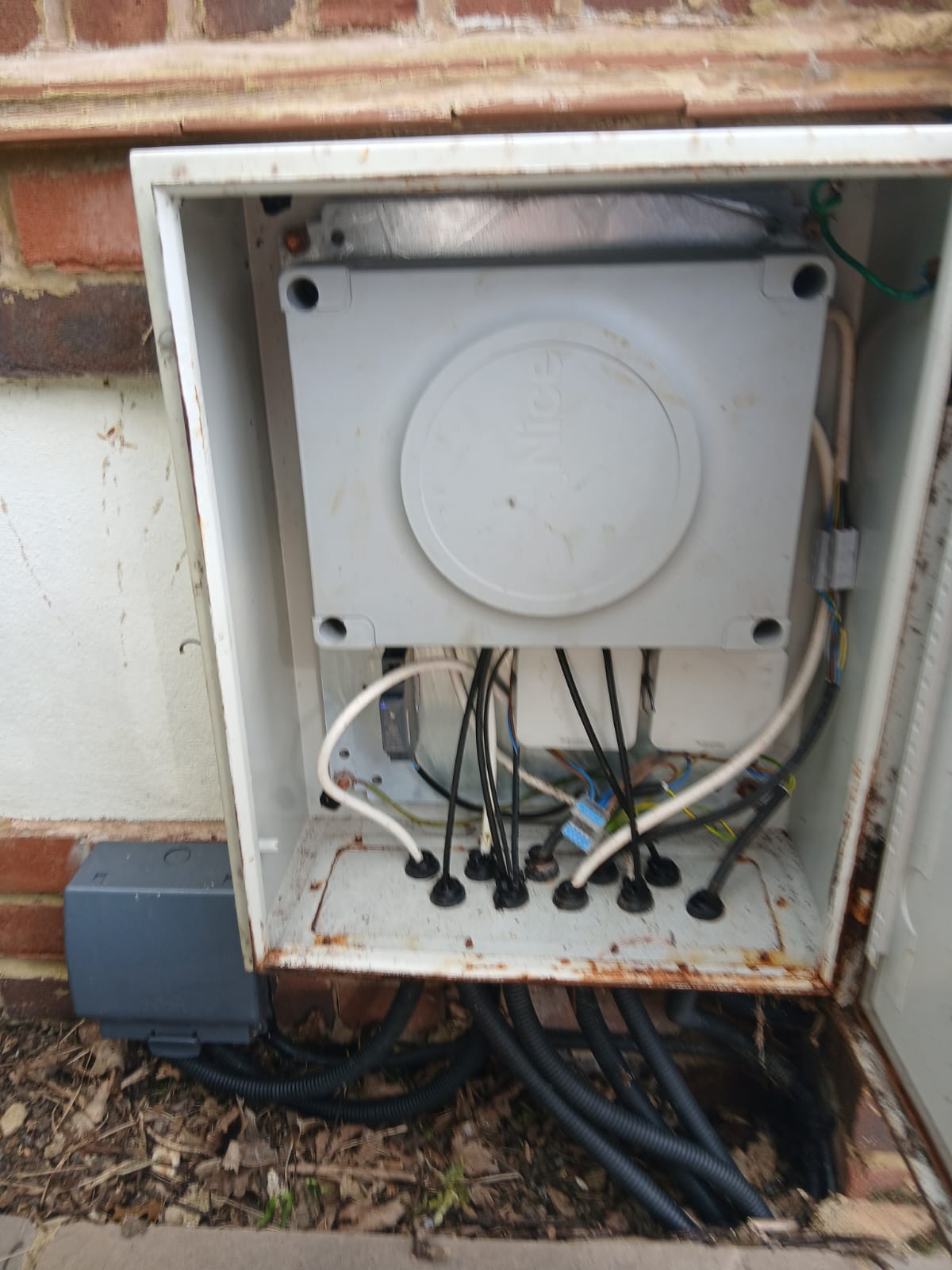
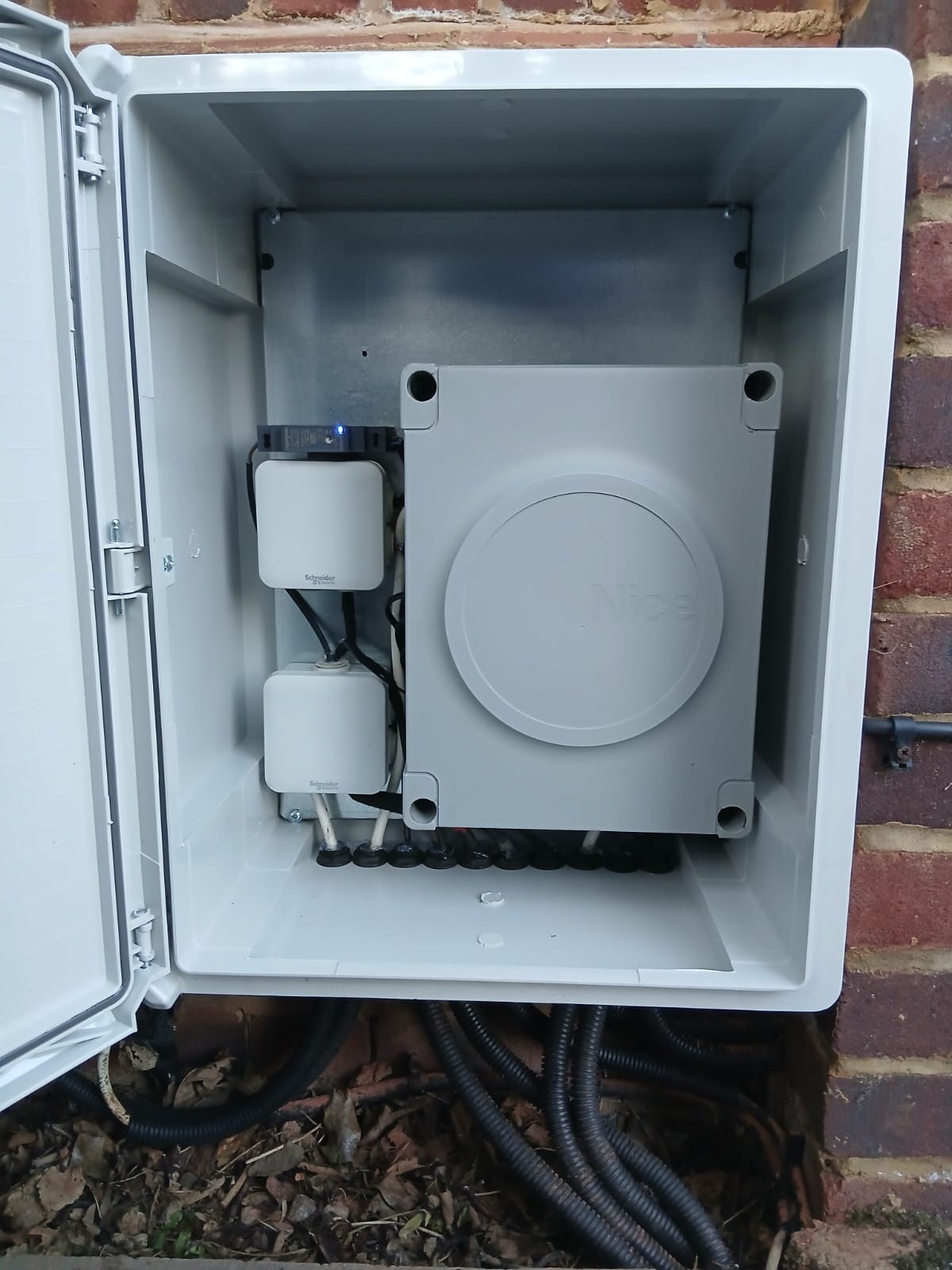
The same gate, before and after. A rusted box with cables jammed through open holes and water getting in — rebuilt into a sealed, weatherproof enclosure with the connections protected and every cable entry sealed. Done once, properly.
Before — weathered, unsealed, corroding
After — sealed, weatherproof, built to last
Repair or reinstall? How we decide
Our default is always to fix what can be sensibly fixed. Most gates are worth repairing. A reinstall only makes sense when the gate keeps failing because the base it was built on was wrong — here’s the simple test we use on site.
Green — we just fix it
One part has failed and everything else is sound — the cabling, the safety devices, the boxes, the power supply. Most gates are here. We repair it and you’re done.
Amber — we repair now, and tell you what’s coming
The gate works but a weakness is building — an ageing motor near the end of its life, a box starting to corrode, a safety part that should be added. We repair it and put a rough timeline on the rest, so there’s no surprise bill later.
Red — a clean reinstall is the smart money
Several things are wrong at once — the wrong, too-thin cable throughout; no working safety devices and no easy way to add them; no power cut-off; flooded, corroded boxes; or we’ve been back two or three times and each fix just exposes the next fault. When the next repair plus the repairs we can already see coming get close to the cost of doing it once properly, a reinstall is the cheaper choice over the next few years — not the dearer one.
Our promise:even on a gate we’d reinstall, we’ll always quote the repair too — so you can compare and decide for yourself.
Gate like one of these?
Tell us about it and we’ll say honestly whether it’s a simple repair or a gate that’s better reinstalled — and we’ll quote both so you can compare. If you just want peace of mind, a full service includes force testing, sensor checks, an electrical inspection and a written report flagging anything from a previous install.